Cartier’s watch designs often depend on proportion more than visual complexity. The curve of a case, the spacing of Roman numerals, and the shape of a bracelet can matter more than a long feature list. When comparing replicas, start with the collection’s silhouette and then inspect how its details fit together. Santos, Tank, Ballon Bleu, and Panthère each offer a different starting point.
Santos: the versatile square design
The Santos de Cartier combines a square case with visible screws and a bracelet that continues its geometric lines. The supplied guide highlights the medium and large styles, described at approximately 35.1 mm and 39.8 mm in width. Those figures are useful for comparison, but a square watch should also be judged by its overall length and how the bracelet curves around the wrist.
Look for balanced numerals, a crisp minute track, and neat finishing around the bezel screws. On bracelet versions, inspect the connection to the case and the clasp. If a listing advertises removable links or a quick-change strap system, confirm that the particular replica actually includes those functions rather than assuming them from the Santos name.
Tank: a case study in proportion
The Tank’s rectangular shape creates a different impression from a round watch with a similar measurement. Its vertical side sections, known as brancards, frame the dial and define the design. Must and Solo styles keep the presentation relatively simple, while the Française places greater emphasis on its metal bracelet.
Compare the exact Tank variation rather than treating the name as one specification. Case length, width, thickness, crown shape, and dial layout can all change. A leather strap should meet the case neatly and have a buckle that suits the watch’s scale. A bracelet version needs additional attention to its link articulation and finishing.
Ballon Bleu: rounded lines and a recessed crown
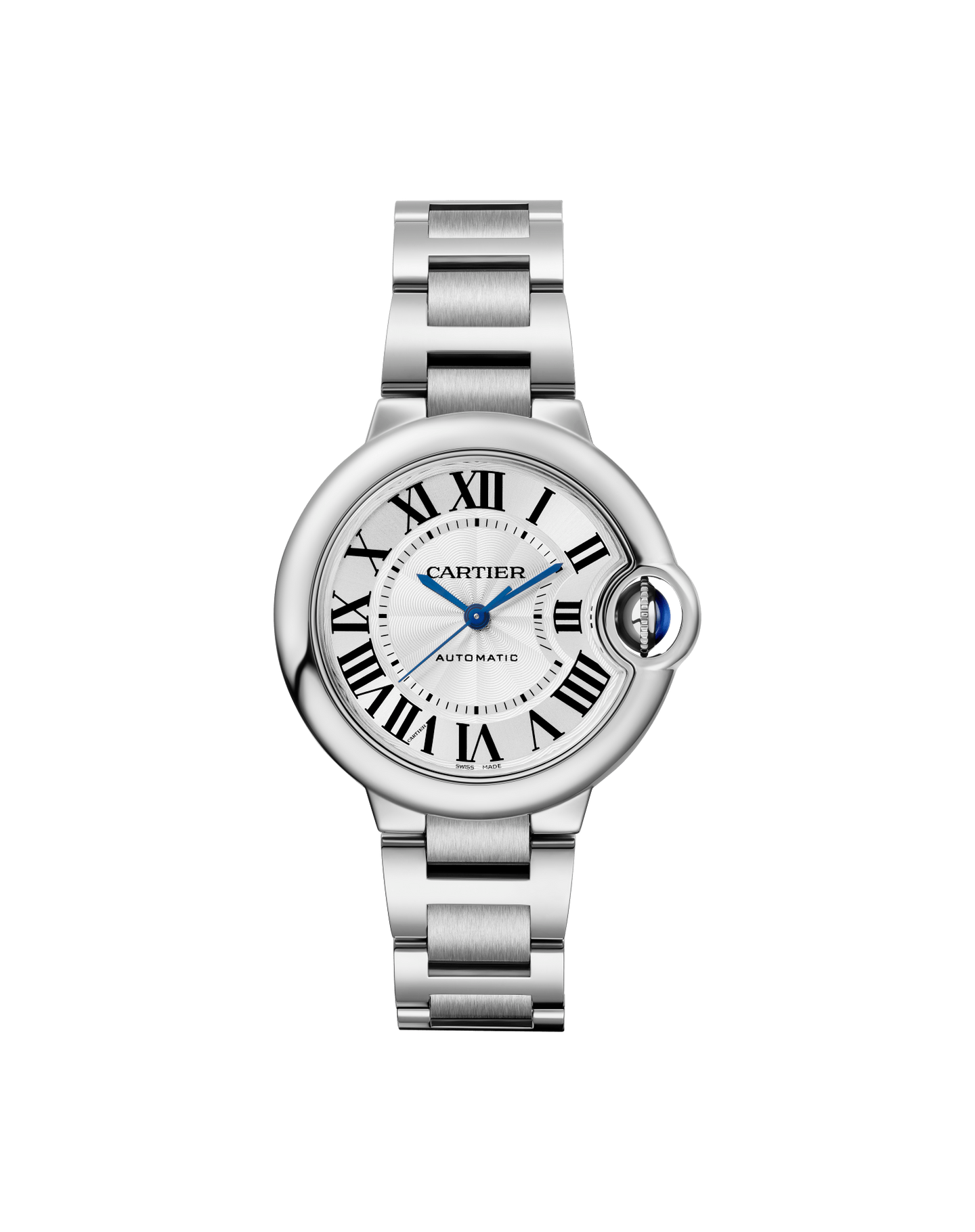
The Ballon Bleu, introduced in 2007, has a rounded case and a distinctive crown set within a protective curve. The dial’s minute track bends around that area, making the crown opening and surrounding printing especially useful details to inspect. Front and side photographs reveal different parts of the design, so request both.
Several case sizes and movement types appear across the collection. Choose according to the actual listing rather than assuming a size always uses a particular mechanism. The rounded case can look soft and compact in a straight-on photograph while having more presence in profile.
Panthère: the bracelet is central
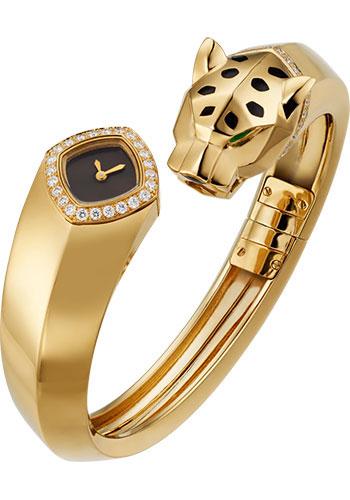
The Panthère treats the watch and bracelet as one continuous piece. Its small square case and flexible links create a jewelry-like appearance. For a replica, the bracelet’s movement, polished surfaces, clasp, and sizing range deserve at least as much attention as the dial. Ask for photographs showing the watch lying naturally rather than only held rigidly in place.
Steel, two-tone, and gold-tone finishes change the effect considerably. A gold-colored surface should not be confused with solid gold. Confirm the stated material and finish, and inspect the edges and clasp where differences in color or surface treatment may be easier to see.
A useful comparison checklist
- Choose the collection and reference before comparing factory labels.
- Review case width, length, and thickness together.
- Check Roman numeral spacing, minute-track alignment, and hand shape.
- Inspect the crown, cabochon-style detail, and case edges.
- Confirm the installed movement and any bracelet adjustment features.
- Request photographs of the actual watch, including its clasp and underside.
Use rankings as a starting question
The source mentions GF, BV, V6F, and AF across several Cartier designs. Those labels do not prove that every example has identical materials, finishing, or functions. The most useful comparison is between clearly described versions of the model you want. A familiar factory name cannot answer questions about fit or the condition of an individual watch.
Explore the Santos, Tank, and Ballon Bleu guides, or browse the Cartier collection at Beasts.us.com to compare the main design families.