The Rolex Datejust design sits comfortably between a dress watch and a casual everyday watch. Its date window, round case, and broad choice of dials make small configuration changes especially noticeable. When comparing replicas, begin with the combination you want to wear, then check the materials, proportions, and movement of the specific version.
Start with proportions
The familiar 36 mm and 41 mm options create different impressions even before the dial or bracelet changes. The smaller style gives the case and bracelet a more restrained relationship, while the larger version places greater emphasis on the dial. Case thickness and bracelet fit also affect how the watch feels.
Use dimensions for the exact replica instead of assuming that a reference-style name guarantees the original measurements. A side photograph helps show the case height and bezel profile, and the clasp's adjustment range matters once the bracelet is sized.
What the fluted bezel adds
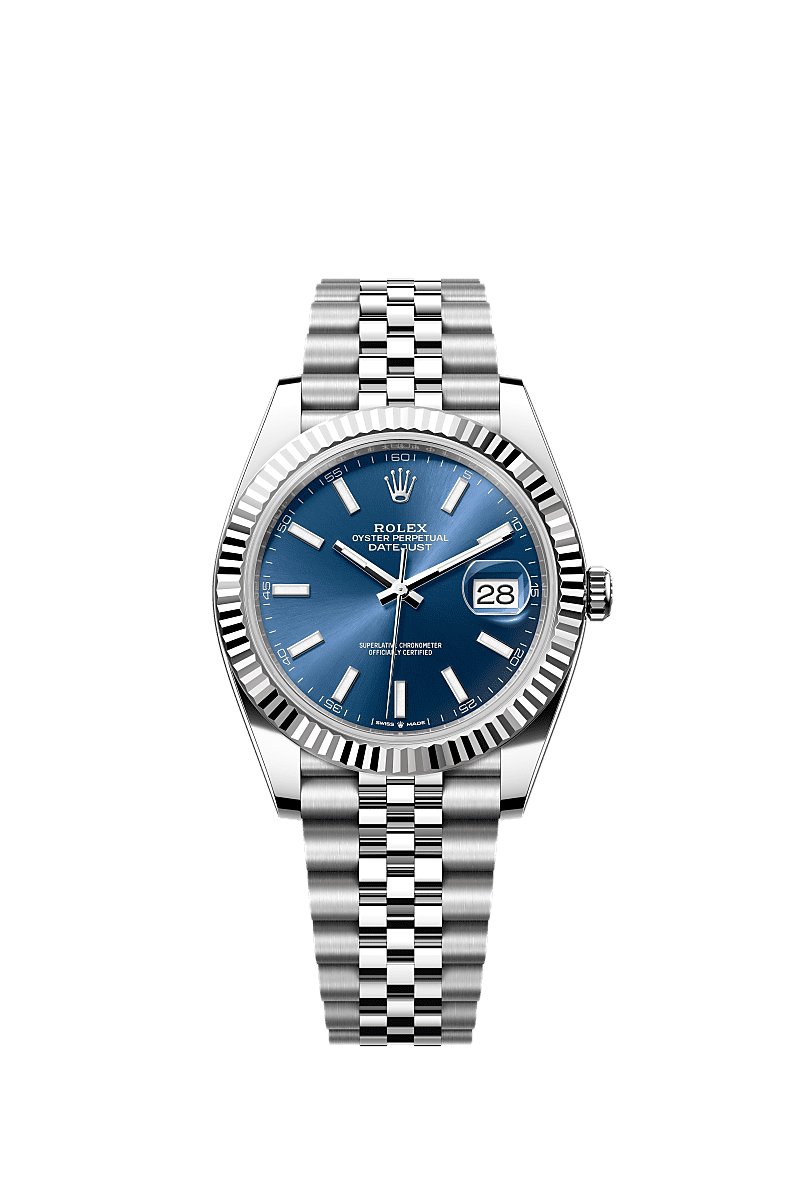
A fluted bezel breaks reflections into alternating bright and dark sections as the wrist moves. That lively border is a major part of the Datejust's dressier character. A smooth bezel creates a calmer outline and lets the dial or bracelet become the main point of interest.
Replica bezel materials can differ from the genuine reference. A silver-colored fluted bezel should not automatically be described as white gold. Check the stated material and look for consistent fluting, clean edges, and an even finish around the entire circumference.
Choose a dial by its overall effect
| Dial style | What it brings to the design |
|---|---|
| Blue sunburst | A changing appearance as light moves across the surface. |
| Silver or slate | A restrained palette that keeps the bezel and bracelet prominent. |
| Black | A stronger contrast with bright hands and markers. |
| Mint green | A lighter color accent with a relatively simple face. |
| Wimbledon-style | A distinctive combination of a slate-colored dial and green-outlined numerals. |
| Motif dial | Patterned texture that adds interest beyond color alone. |
Sunburst and textured dials can look very different under direct light and diffuse light. Request more than one view before deciding that a shade is wrong or right. With patterned dials, inspect the consistency of the motif around the markers and date window as well as the overall color.
Jubilee or Oyster-style bracelet?
The Jubilee-style bracelet has a more intricate appearance, with smaller visual divisions across each row of links. It pairs naturally with the sparkle of a fluted bezel. The Oyster-style bracelet has broader surfaces and a simpler, more sporting character.
Neither choice settles comfort on its own. Look at the fit between the case and end links, the finish of the link edges, and the clasp. The bracelet should articulate smoothly and offer enough adjustment for a secure fit without being uncomfortably tight.
Two-tone finishes and inspection points
Two-tone and rose-gold-colored versions add warmth to the design. Ask how the colored areas are finished and which parts are coated. A replica's gold-colored surface is not equivalent to an authentic precious-metal component, and photographs alone cannot establish coating thickness or longevity.
Before approval, check the dial markers, printing, date position, magnifier alignment, bezel finish, and bracelet junction. Factory labels such as Clean may help identify a version, but they do not replace a review of the actual watch.
The QC photo guide explains those checks in more detail. Compare the Rolex replica collection and the Day-Date guide if you are deciding between a simple date display and the more prominent day-and-date layout.