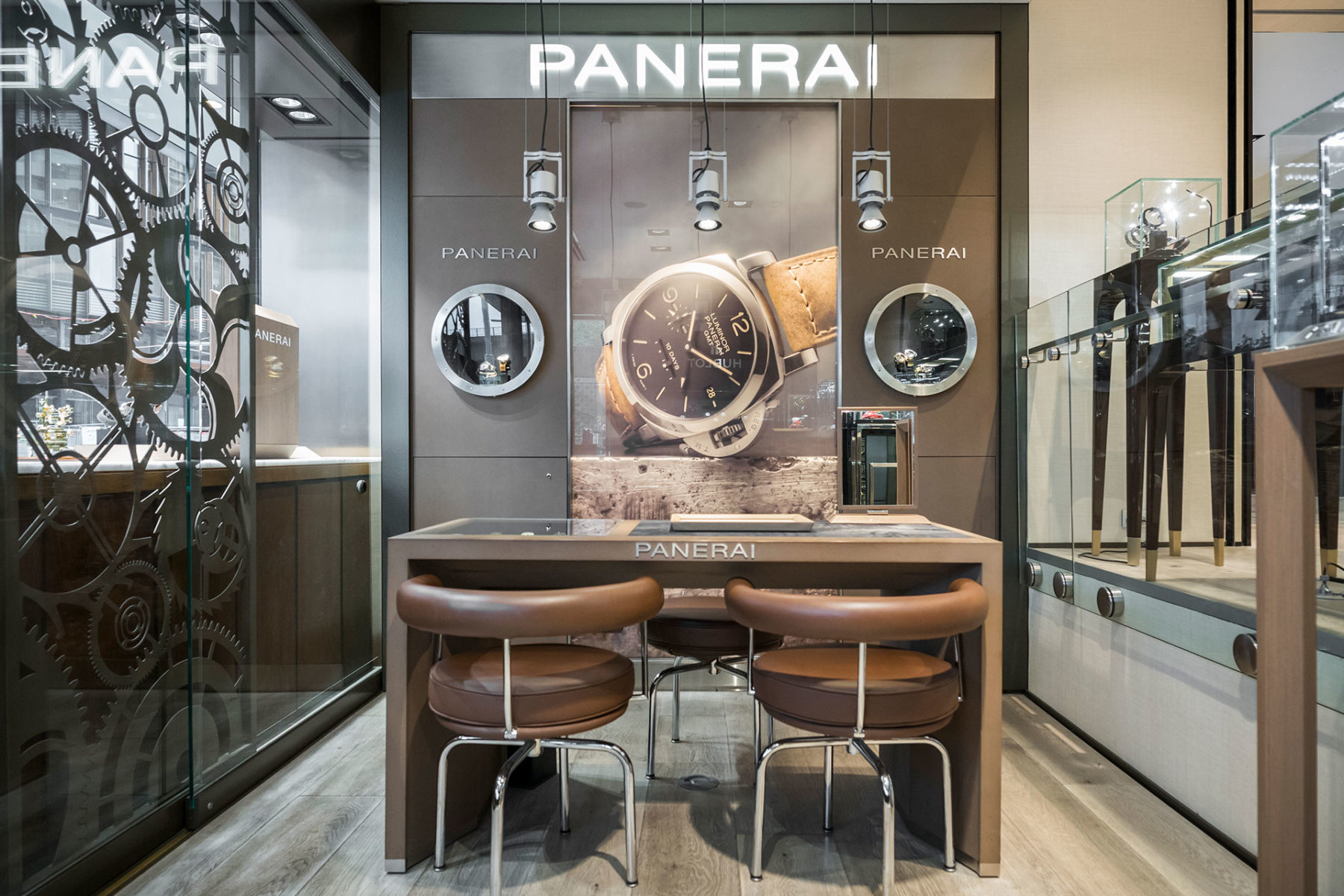
Panerai’s bold numerals and cushion-shaped cases make the collections recognizable at a glance, but their differences become clearer on the wrist. The Luminor emphasizes its crown-protection bridge, the Radiomir uses a cleaner case outline, the Due aims for a slimmer presentation, and the Submersible adds a timing bezel. Comparing replicas works best when those distinct design priorities stay in view.
Luminor: the familiar crown-protection bridge
The Luminor Marina is a useful starting point for understanding Panerai’s design language. A reference such as PAM01312 combines a 44 mm case with a simple dial and the prominent bridge beside the crown. On a replica, inspect the bridge’s shape, its fit against the case, and the action of its lever rather than treating it as a purely decorative feature.
The dial deserves a close look as well. A sandwich-style construction uses layers to create recessed numerals and markers. Ask whether the particular version uses that construction or a printed interpretation. Side lighting can reveal depth around the cutouts more clearly than a brightly exposed head-on photograph.
Luminor Due: proportions become the focus
The Due keeps the recognizable crown-bridge silhouette while moving toward a thinner, more restrained watch. That makes case thickness especially important when assessing a replica. Request the actual measurement and a side photograph showing the bezel, midcase, and back together. A familiar dial cannot compensate for a profile that changes the intended character.
Sunburst and lighter dial treatments also create a different impression from the traditional dark Panerai face. Inspect the finish in neutral lighting, paying attention to marker edges and the contrast of the hands. The strap should suit the case’s proportions rather than appearing oversized simply because it carries a Panerai-style buckle.
Radiomir: a cleaner case outline
The Radiomir removes the Luminor’s bridge and places greater emphasis on the cushion case and crown. Wire-lug styles such as the PAM00754-inspired design have their own visual balance. Check the shape and placement of the lugs, the gap between strap and case, and how the strap curves when the watch is worn.
Because the design has relatively few elements, the crown shape, dial printing, and case finishing are easy to notice. Compare the specific reference before assuming all Radiomir versions share the same lug construction, dimensions, or winding arrangement.
Submersible: bezel and case details
The Submersible adds a rotating timing bezel and a more overtly sporting appearance. Inspect its markers, alignment, and edge profile, then ask how the bezel operates. Confirm the stated materials of the bezel and case separately. A ceramic-colored insert or textured surface should not be assumed to use the material associated with an original reference.
The diver styling also needs to be separated from tested performance. Use the individual replica’s specifications and documented testing information for water exposure, rather than transferring an original model’s rating. Case diameter, thickness, and the strap’s attachment angle are all useful when judging everyday fit.
Movement and factory descriptions
VS, PAM, KW, HW, and ZF appear among Panerai replica factory labels. These names help distinguish offerings only when paired with a model, version, and clear specification. Terms such as “clone P.9010” or “premium movement” need explanation: ask what operates the watch, which functions are included, and whether visible decoration describes the mechanism or its appearance.
- Check the crown, bridge, and lever where fitted.
- Inspect numeral depth and the consistency of the dial finish.
- Compare case dimensions with the strap and buckle.
- Review the movement description and setting instructions.
- Request photographs of the actual watch from several angles.
Browse the Panerai collection at Beasts.us.com or explore the Luminor and Radiomir guides to compare the two core shapes more closely.