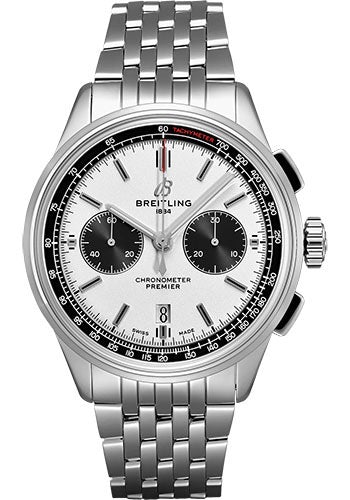
The Breitling Premier offers a different mood from the Navitimer or Avenger. Its cleaner dial, more restrained case, and balanced chronograph layout make it a useful comparison for anyone who likes Breitling’s timing heritage but prefers less visual activity. A replica should be assessed through those proportions and finishing details rather than by the number of features in its description.
A quieter part of Breitling’s history
The Premier name dates to 1943, when Breitling presented a more refined approach to the chronograph. The modern collection carries that idea through a range of dial colors, case sizes, and heritage-inspired layouts. Its design allows the subdials and hands to stand out without the Navitimer’s surrounding calculation scales.
That simplicity does not mean every Premier looks the same. B01 Chronograph 42 styles, Automatic 40 designs, and heritage-inspired chronographs have different arrangements and proportions. Identify the exact version represented by a replica before comparing markers, date placement, or the number of subdials.
Dial color changes the character
Light dials emphasize spacing and printing, while blue versions can make the subdials feel more integrated with the background. Green, including Bentley-inspired treatments, gives the watch a stronger color identity. Ask for photographs in neutral lighting to distinguish the actual finish from reflections and image editing.
Do not treat silver, pistachio, and green as interchangeable color descriptions. They refer to different visual effects, and a listing should identify the configuration clearly. Compare the color of the hands and markers as well, since their contrast determines how easily the time can be read.
What a clean dial reveals
The Premier’s open layout makes alignment especially noticeable. Inspect the hour markers or numerals, the outer track, and the spacing around the subdials. The hands should look proportionate to the scales they serve. Where a date window is present, check that the number sits neatly within the opening.
- Look for even printing around each subdial.
- Inspect hand edges and the consistency of their finish.
- Check that applied elements sit level on the dial.
- Review the bezel and case sides in angled photographs.
- Make sure any special-edition details match the stated design.
Movement appearance and operation
A listing may use “B01 clone” to describe its movement offering, but that term should be explained. Ask for the actual mechanism and the functions it supports. If the replica has a display caseback, a decorated rotor or bridge can resemble a Breitling caliber without reproducing the original architecture.
For a chronograph, request a start, stop, and reset video. Establish which register shows running seconds and which registers measure elapsed time. Check that the timing hands return to their intended positions. Appearance through the back is one part of the comparison; clear, demonstrated operation is another.
Case profile and strap choice
The Premier’s restrained appearance can be undermined by an unexpectedly thick case, so review the actual dimensions and a side photograph. Look at the relationship between bezel, case middle, and back. Polished surfaces should have a clean boundary where they meet brushed areas, without blurring the intended lines.
A leather strap complements the collection’s dressier presentation, but its fit matters as much as its color. Inspect the gap at the lugs, stitching, buckle, and adjustment range. A bracelet creates a brighter, more continuous look and calls for photographs of the clasp and underside as well as the front.
Premier or another Breitling?
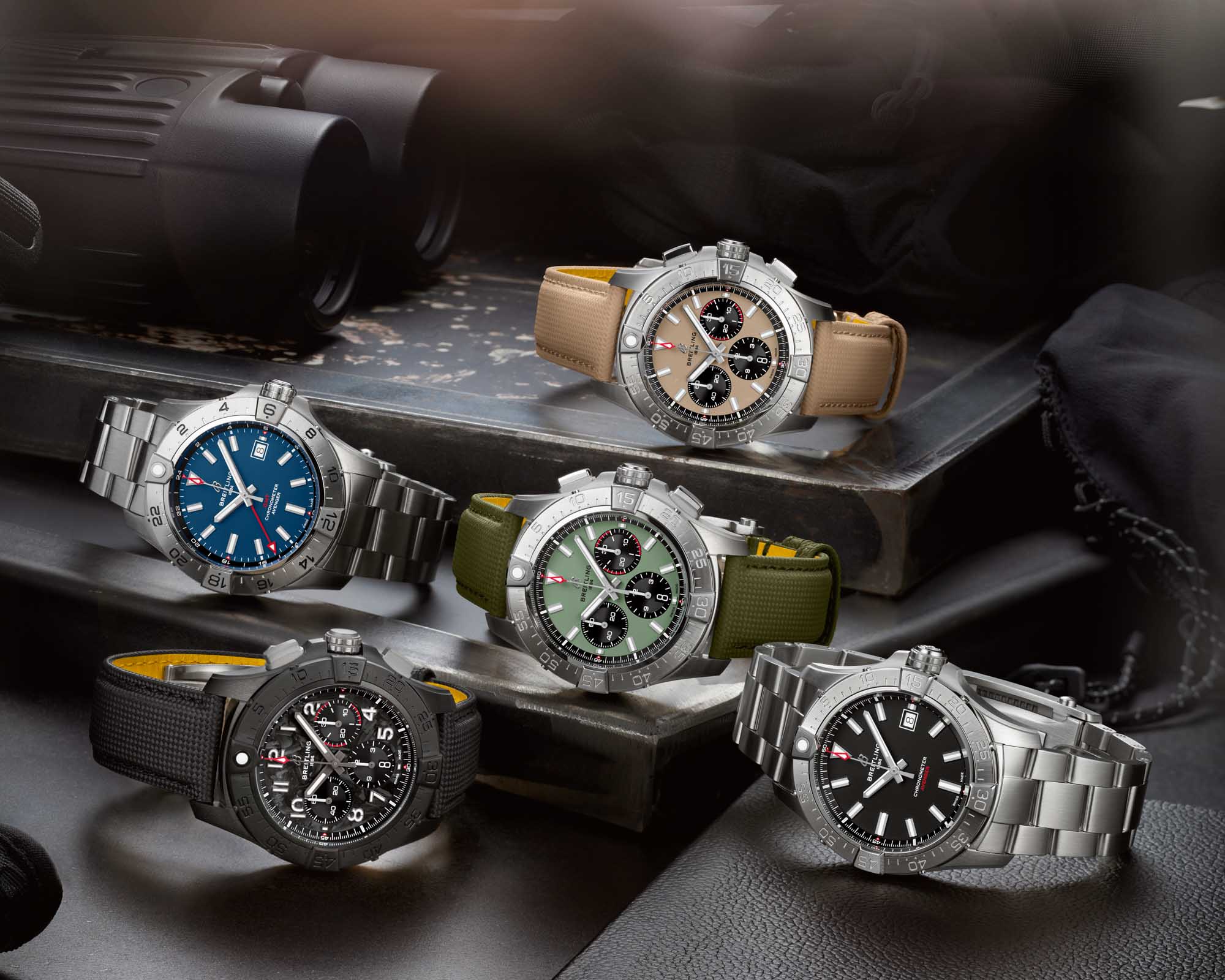
The Premier offers a balanced chronograph for someone who prefers a calmer dial. The Navitimer provides denser aviation detail, while the Avenger emphasizes a more substantial case. Compare the Navitimer guide, the Avenger guide, and the Breitling collection at Beasts.us.com to decide which proportions appeal to you.