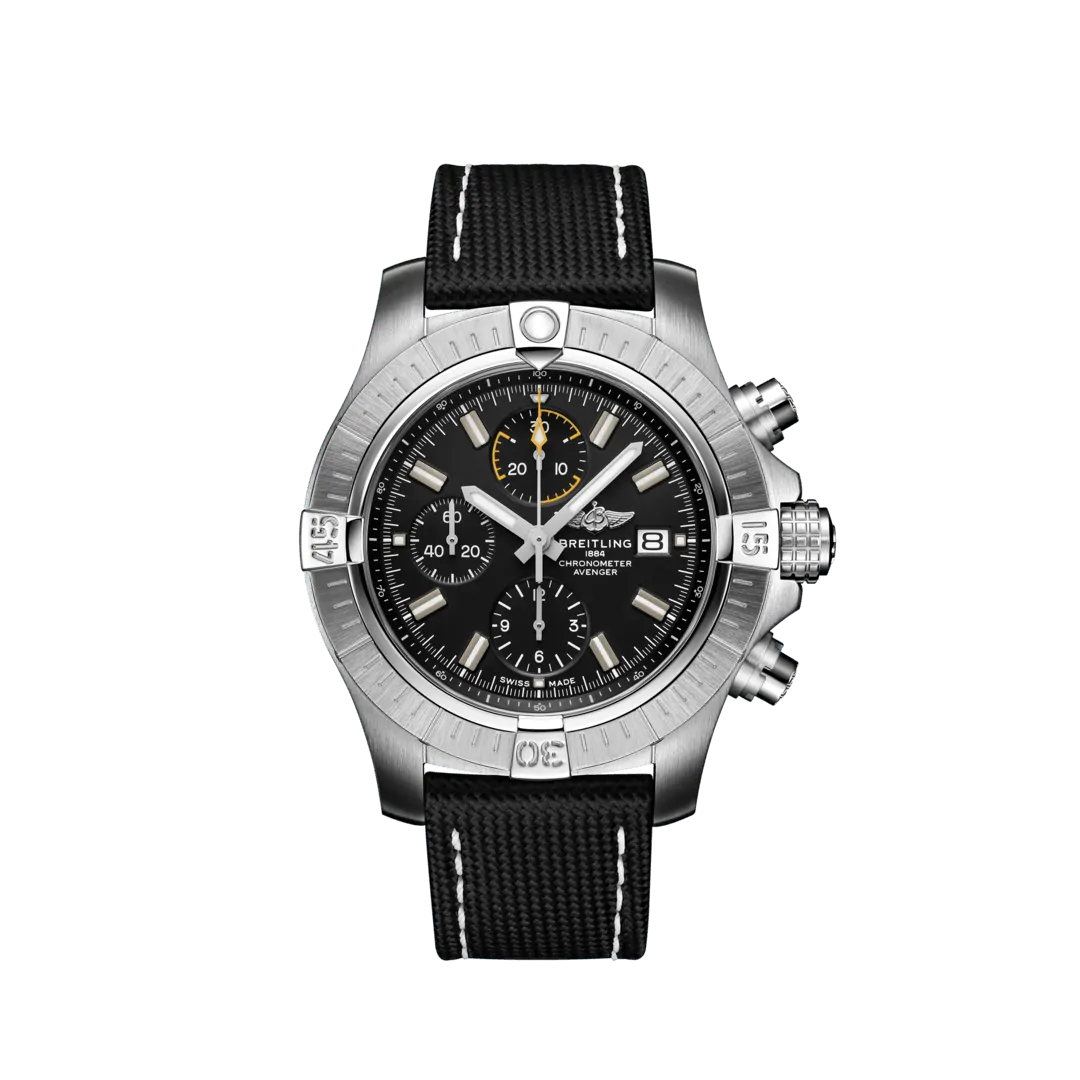
The Breitling Avenger has a deliberately substantial appearance: a broad case, prominent crown, protective guards, and easy-to-read dial details. A replica should be compared with those proportions in mind. The Automatic, Chronograph, and GMT versions share a sporting character, but their displays and mechanisms create different questions for anyone considering one.
Automatic, chronograph, or GMT?
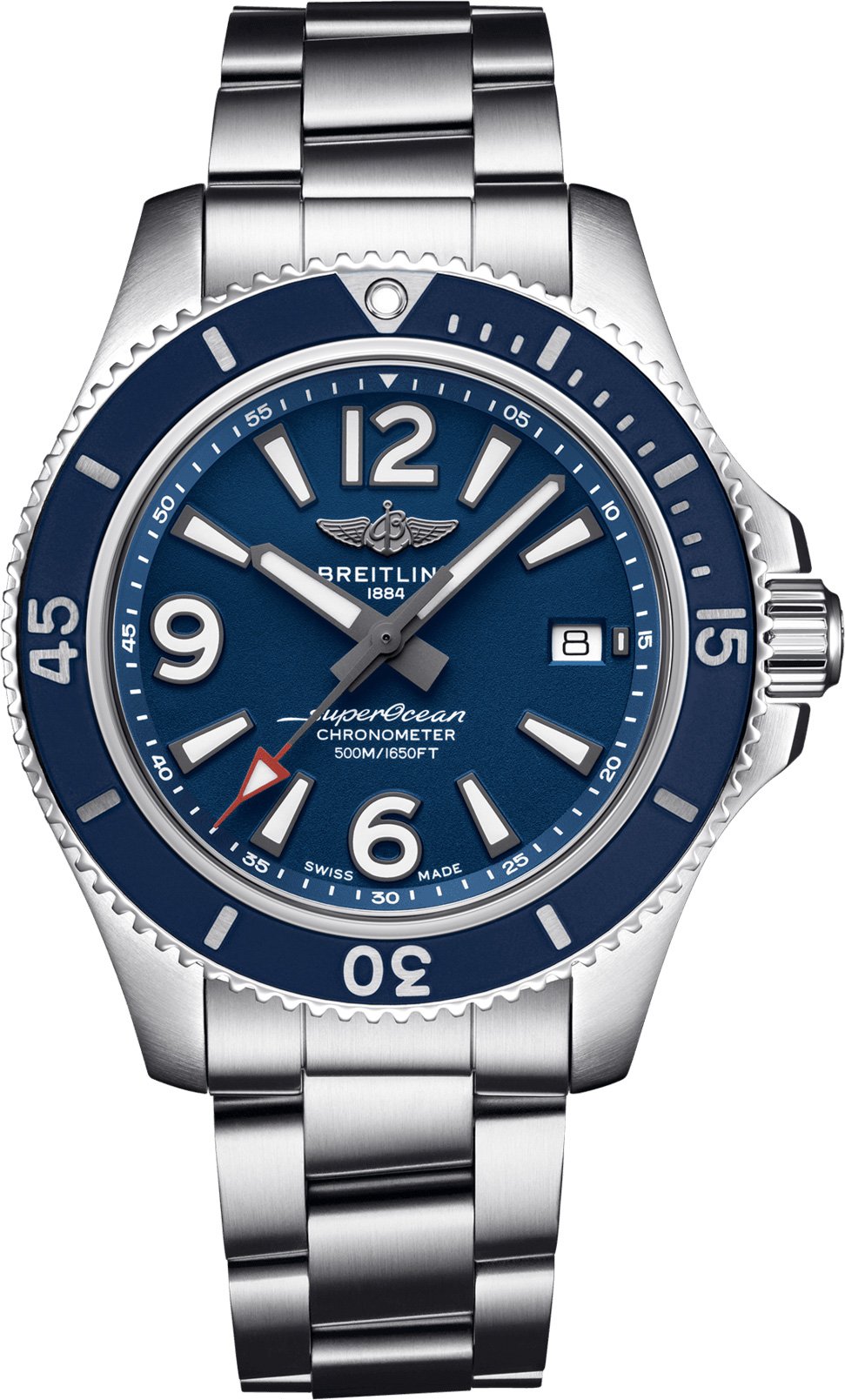
The Avenger Automatic keeps the dial relatively clear, concentrating on time and date. That simpler layout gives the hands, hour markers, and bezel more visual space. It also makes the watch easier to assess from photographs, since fewer subdials and controls need explanation.
The Chronograph adds pushers and elapsed-time registers, usually creating a thicker and busier presentation. A GMT-inspired version adds a second-time-zone display. In either case, ask what the replica’s additional hands actually do and how they are adjusted. The model name alone does not establish the movement’s functionality.
| Version | Main appeal | Key question |
|---|---|---|
| Automatic | Clear dial and simpler controls | Which movement is installed? |
| Chronograph | Timing displays and prominent pushers | Do the registers operate and reset correctly? |
| GMT | An additional time-zone indication | How is the extra hand set? |
Size means more than diameter
Avenger styles in the 43 mm and 45 mm ranges already have a strong presence, and larger versions push that further. The case thickness, lug shape, and crown guards all affect how the watch wears. Compare actual measurements and a side view before using a diameter alone to judge the fit.
A strap may let the case sit differently from a bracelet, so consider the configuration you expect to wear. Ask how long the supplied strap is, where its adjustment holes fall, and what clasp or buckle is included. On bracelet models, inspect the first links and the number of removable sections.
Bezel, crown, and case finishing
The Avenger’s bold bezel numerals and markers should be clear and evenly placed. Check the reference marker against the dial and inspect the bezel edge around the full circumference. If rotation is advertised, request a demonstration that shows its action and alignment rather than relying on a statement that it “feels correct.”
The crown and pushers should look proportionate to the guards surrounding them. Review their finish and seating in close photographs. Brushed and polished surfaces should meet cleanly, especially around the lugs and case sides. A large case makes these transitions prominent, so they deserve as much attention as the dial.
Steel and dark-finish versions
Steel finishes emphasize the Avenger’s broad surfaces, while Night Mission-inspired dark versions create a more subdued look. Confirm what material the replica actually uses and how the color is applied. A matte black appearance does not by itself establish titanium, DLC, or the same construction as an original reference.
Also inspect the finish at the buckle, crown, and edges, where inconsistencies can be easier to spot. Weight can help describe the experience of wearing the watch, but it is not a stand-alone test of material or overall quality.
Choose the movement by its demonstrated features
Listings may use terms such as B01 clone, Asian 7750, or modified automatic movement. Ask for a precise description of the installed mechanism and its controls. For chronographs, watch a start, stop, and reset sequence, checking that the timing hands return to their intended positions. Avoid assuming every subdial is an elapsed-time register.
The Avenger is a strong option to compare when you prefer a bold instrument-style watch with a less crowded face than a Navitimer. Read the Navitimer guide or explore the Breitling collection at Beasts.us.com to compare the two approaches.