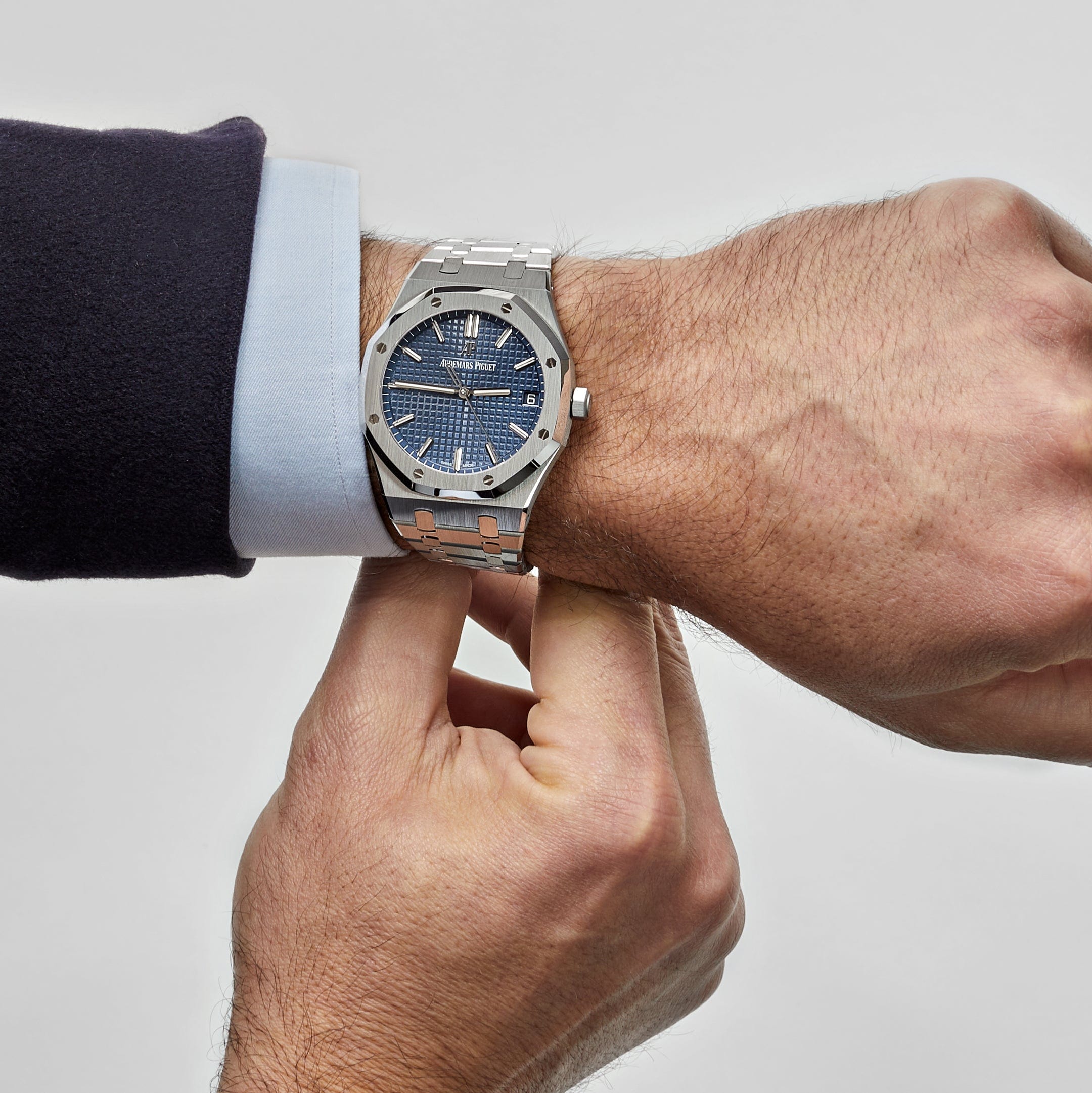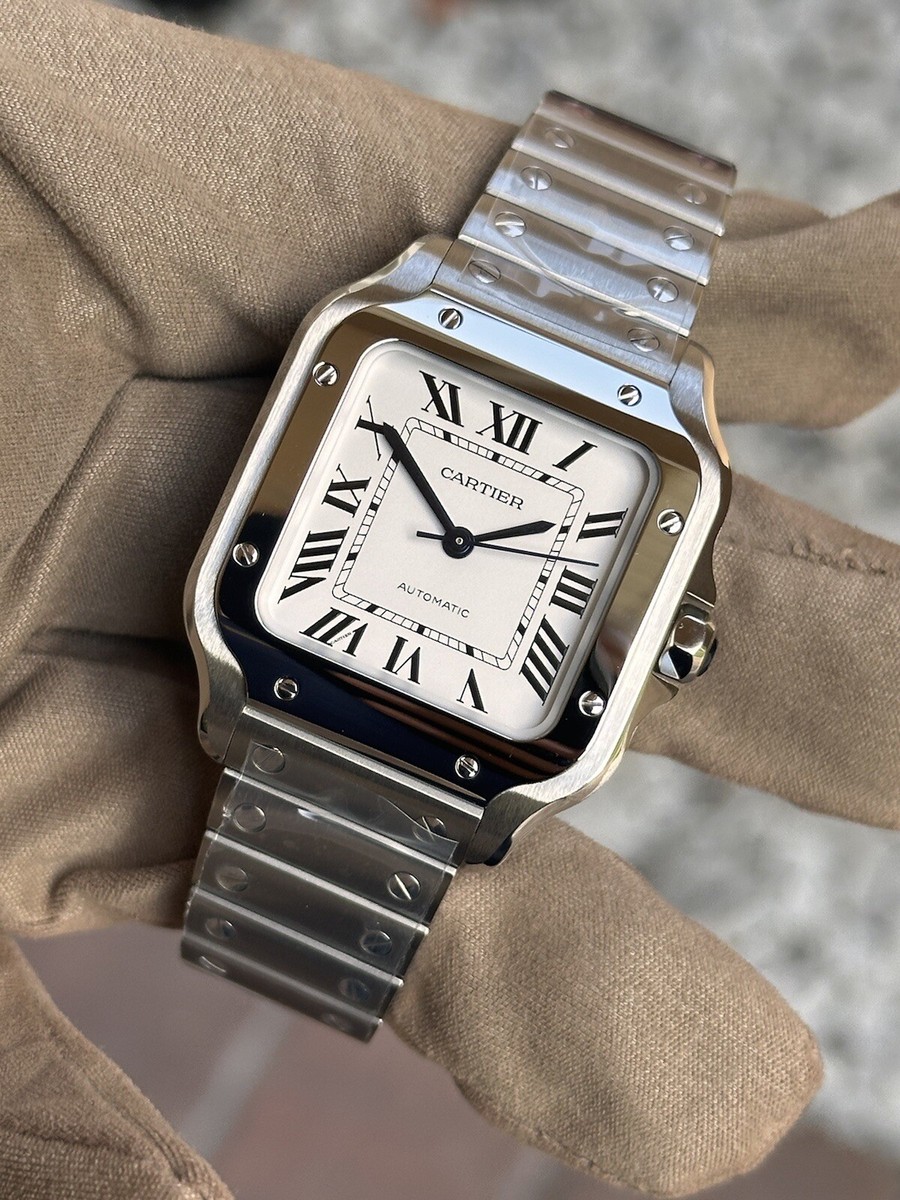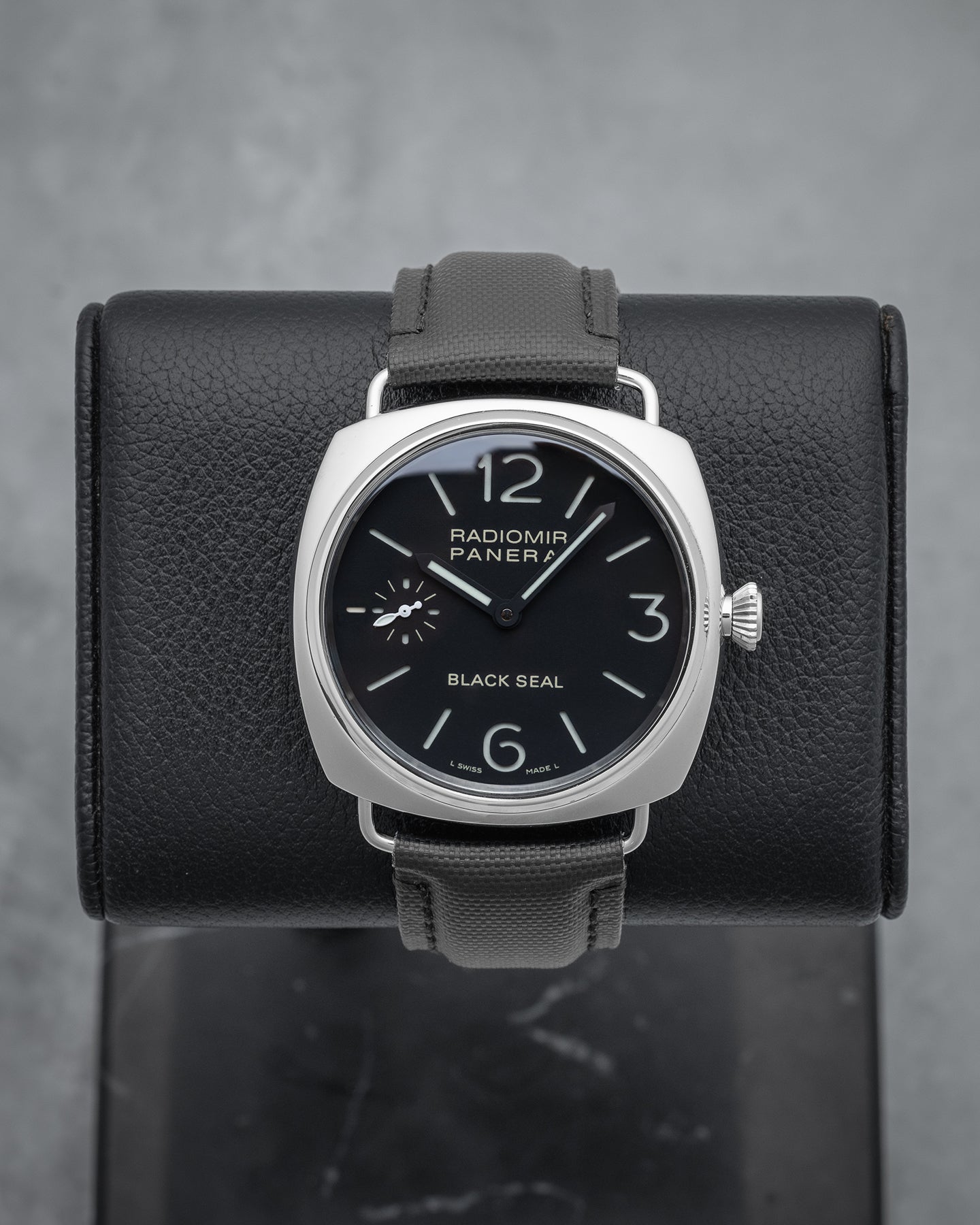
The Panerai Radiomir presents the brand’s cushion-shaped case without the Luminor’s crown-protecting bridge. Its exposed crown and, on many designs, slender wire-style lugs give it a different outline. The result is visually simple but highly dependent on proportion. A Radiomir replica should be judged by the exact reference it represents and the construction of the watch being offered.
The early Panerai connection
The Radiomir story reaches back to Panerai’s work on watches and luminous instruments for naval use. The name originated with an early luminous material, while the 1930s watch designs established the large cushion case and clear dial associated with the collection.
Modern references reinterpret those features in several ways. Historical inspiration explains the appearance, but it does not establish the materials, movement, or water resistance of a replica. Those characteristics need their own product-specific description.
Wire lugs and solid lugs
Wire-style lugs create a light-looking connection between the strap and the case. Their symmetry is important: the loops should appear consistent in shape and angle, and the strap should sit evenly on both sides. Ask how the attachment is secured and how a strap is removed.
Other Radiomir designs, including the Radiomir 1940 direction, use a more substantial lug treatment. Do not apply wire-lug instructions to every Radiomir. The reference, attachment hardware, and required strap width should all be identified before ordering replacement straps.
Dial layouts with distinct characters
The simplest designs place large numerals and markers around a broad, uncluttered dial. Small seconds, where fitted, add an asymmetrical detail without necessarily making the face busy. Sandwich-style construction introduces depth through cutouts in the upper dial, while other references use different treatments.
A California dial mixes Roman and Arabic numerals, creating a particularly recognizable arrangement. That design should be evaluated as its own reference rather than as a variation in printing alone. Check marker placement, hand proportions, and the clarity of any minute scale.
| Detail | What to inspect |
|---|---|
| Cushion case | Symmetrical curves and consistent finishing |
| Exposed crown | Clean ridges, correct seating, and clear operating instructions |
| Sandwich-style dial | Visible depth where that construction is advertised |
| Wire-style lugs | Even alignment and a secure strap connection |
Fit depends on the complete outline
Radiomir sizes include compact Quaranta designs as well as larger traditional formats. A broad dial and slender lugs can make a watch feel different from a similarly sized Luminor. Measure the complete case and lug length, not just the diameter listed in a title.
A strap that is too stiff can hold the case above the wrist or create gaps at the sides. Compare the thickness at the attachment points and the position of the buckle after adjustment. The right fit is individual, so avoid treating a suggested wrist-size range as a guarantee.
Manual or automatic?
A manually wound watch makes winding part of its regular routine. An automatic uses wrist movement to support winding, but its reserve and operating instructions still depend on the installed mechanism. Ask which type is offered and whether visible movement decoration is cosmetic.
For the crown-bridge alternative, compare the Luminor guide. If a thinner case is the priority, explore the Luminor Due, or browse the wider Panerai collection.