The Rolex Daytona design is defined by three subdials, a tachymeter bezel, and the pushers beside its crown. Those features create a more complex watch than a simple three-hand model. A useful replica comparison therefore needs two parts: how the watch looks and what its chronograph actually does.
Choose the dial configuration first
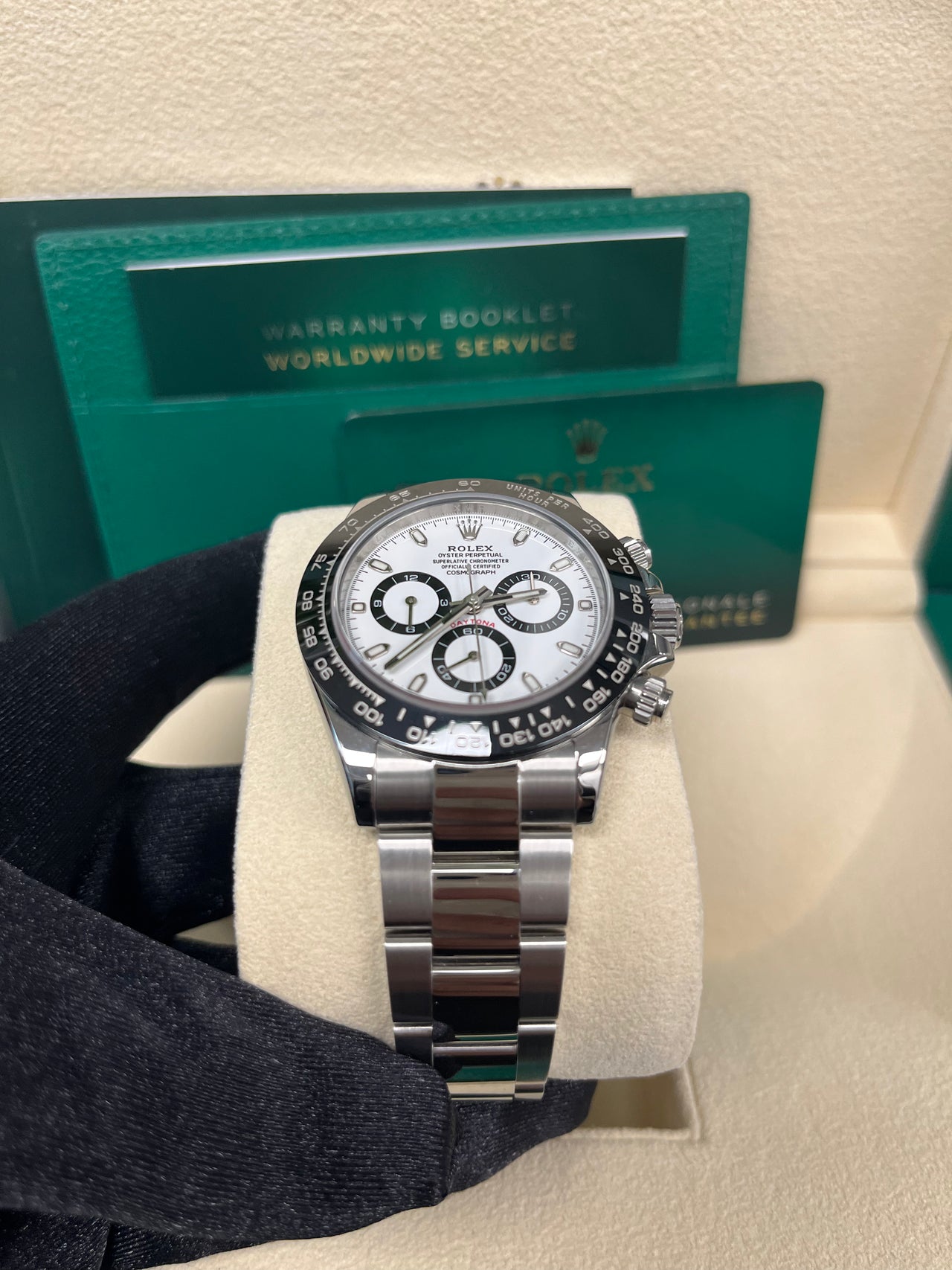
The white-dial 116500LN-style version, often called the Panda, emphasizes contrast between the main dial and the dark outlines around its counters. The black-dial version has a more unified face, with the hands, markers, and subdial details standing out against the darker background.
Gold-colored and two-tone styles change the balance again. Yellow-gold-colored, rose-gold-colored, and silver-colored cases can be paired with a range of dial treatments, but the complete reference matters. A combination shown in a replica listing should not automatically be treated as a configuration offered on an authentic Daytona.
Why movement details matter
The chronograph adds a timing mechanism to the ordinary time display. A replica can reproduce the positions of the subdials while assigning them different functions or using decorative elements. Ask what each counter displays and which movement is installed.
Caliber-style labels such as “4130 clone” appear in descriptions, but the label alone is not a complete specification. Confirm the movement's functions, winding and setting instructions, and any stated power reserve. Decoration and an engraved caliber number do not make a movement a genuine Rolex caliber.
Request a complete chronograph demonstration
A useful video shows the chronograph starting, running, stopping, and resetting. Watch the central timing hand and the relevant counters through the sequence. They should behave as described for the movement, and the reset position should be clear.
Ask how the pushers are operated on the supplied version, including any screw-down collars. If a hand does not return to the expected position or a counter's purpose is unclear, resolve that before approval. Still photographs are useful for alignment but cannot establish the operation of a timing mechanism.
Compare the case, bezel, and bracelet
The tachymeter scale is a strong part of the Daytona's identity. Inspect the clarity and consistency of its markings, the finish around the bezel edge, and the relationship between the bezel and dial. The subdials should be evenly placed, with crisp printing and hands that are easy to read.
A side view helps reveal case thickness and pusher proportions. On a bracelet version, look at the end-link fit, polished and brushed transitions, and clasp. Rubber-strap styles create a different impression, so confirm the strap construction and sizing rather than choosing only from a front-view image.
How to read BT and Clean comparisons
BT and Clean are labels used to distinguish Daytona replica versions in the material covered by this guide. Broad claims that one always has the better dial or bracelet are less useful than photos of the exact reference and revision. Component choices and individual assembly deserve their own review.
| Area | Evidence to request |
|---|---|
| Dial and counters | Level front view and close-ups of printing and hand positions. |
| Case and bracelet | Side views, clasp photos, and clear end-link images. |
| Chronograph | A start, stop, and reset demonstration. |
| Movement | Written identification and operating instructions for the supplied version. |
Use the QC photo guide to collect those checks. If you prefer a less complex display, compare the Submariner guide; otherwise, browse the Rolex replica collection with both appearance and demonstrated function in mind.