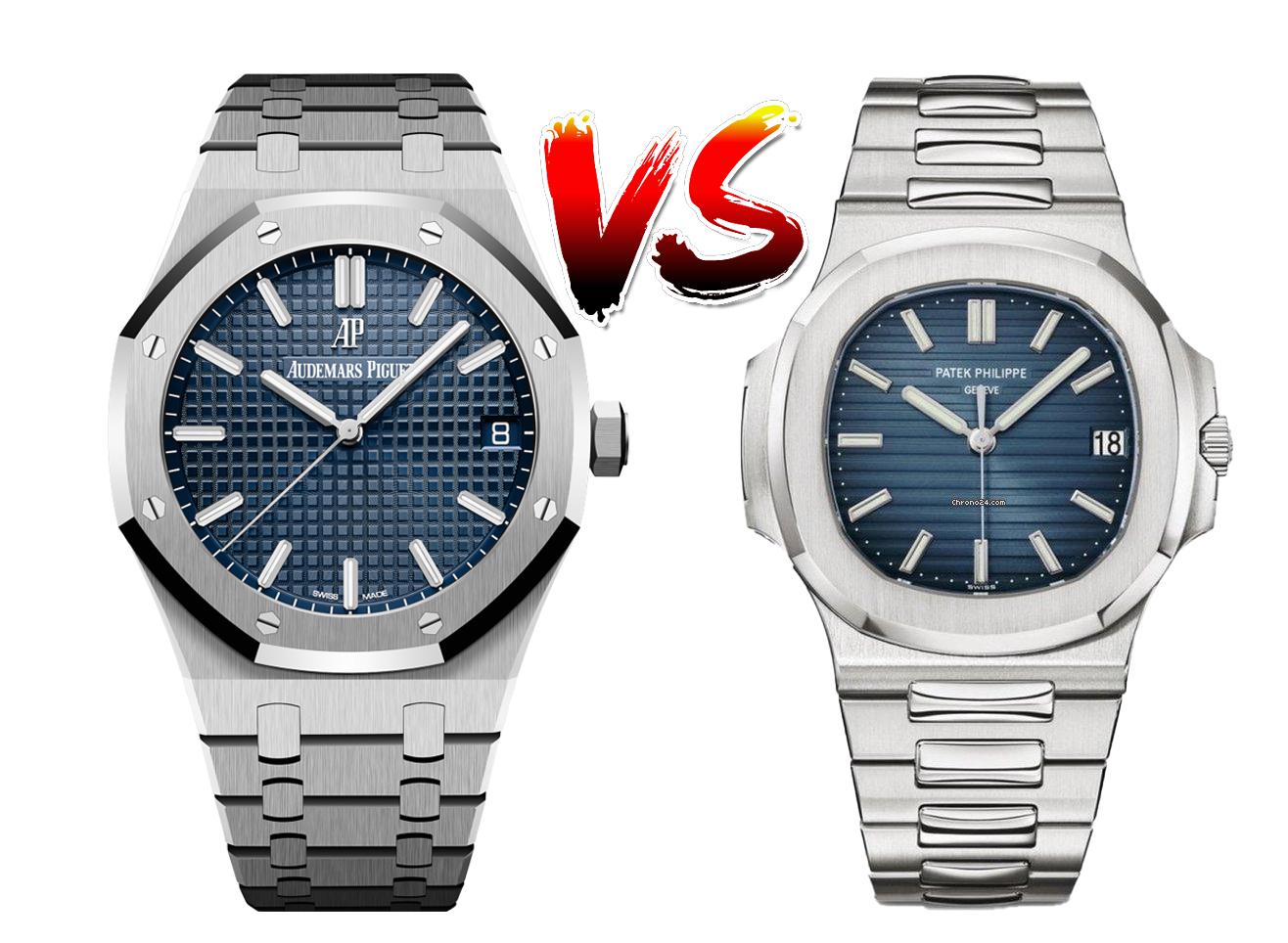
The Rolex Submariner, Audemars Piguet Royal Oak, and Patek Philippe Nautilus offer three very different approaches to a steel sports-watch design. The Submariner emphasizes a timing bezel and clear display, the Royal Oak favors angular geometry, and the Nautilus pairs a rounded outline with horizontal dial texture. Choosing among replica versions begins with those differences.
Compare the design language
| Design | Defining features | Overall character |
|---|---|---|
| Submariner-style | Round case, marked rotating bezel, bold hands and markers. | Direct and tool-oriented. |
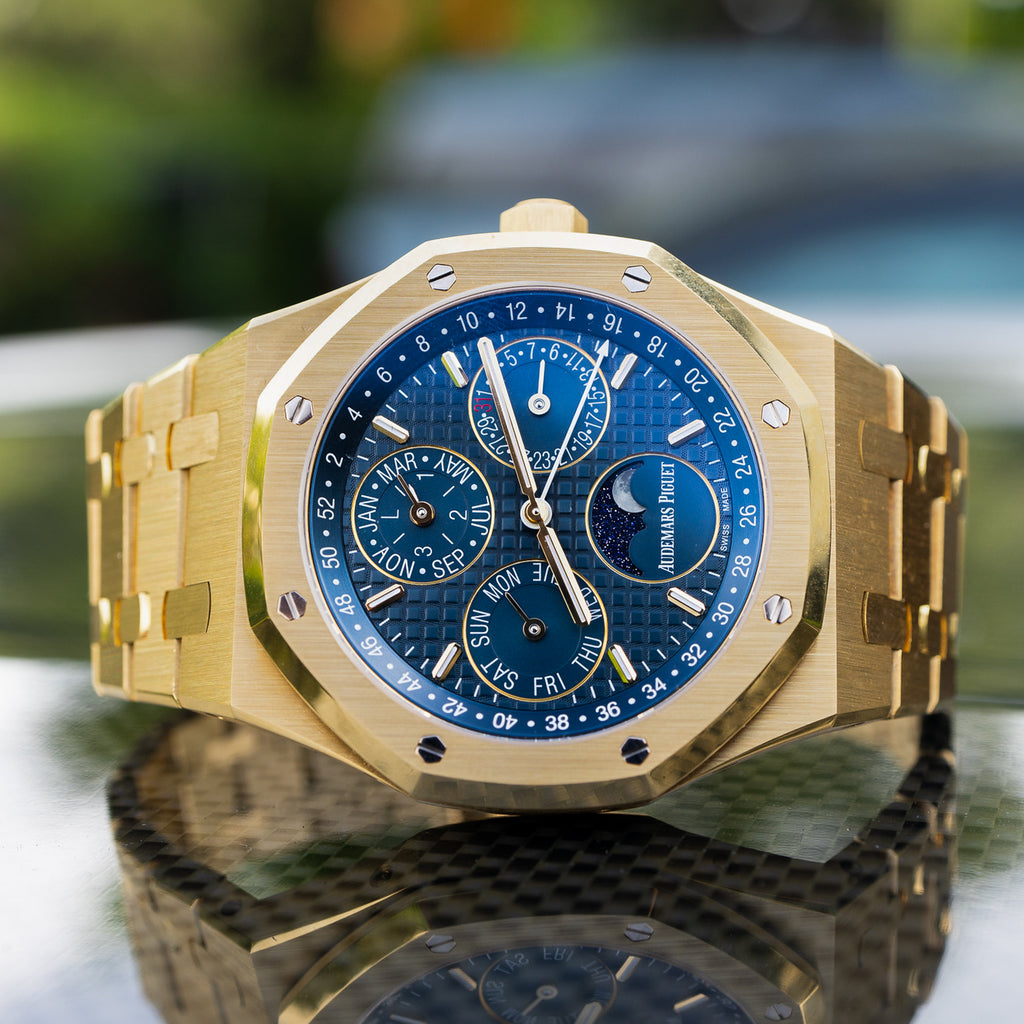
| Royal Oak-style | Octagonal bezel, visible hardware, patterned dial, integrated bracelet. | Angular and visually structured. |
| Nautilus-style | Rounded bezel, side extensions, horizontal dial lines, integrated bracelet. | Softer and more understated. |
The Submariner's bezel provides a strong frame around the dial. It remains prominent even in an all-black configuration. The Royal Oak's bezel edges and bracelet facets create a succession of reflections, while the Nautilus relies more on the contrast between its broad surfaces and fine dial lines.
Think about the dial you want to see every day
A Submariner-style dial prioritizes legibility through large markers and a relatively open center. Date versions add a window and magnifier; no-date versions keep the layout more symmetrical. The bezel introduces another set of markings without making the dial itself complicated.
The Royal Oak's tapisserie-style pattern gives the face a geometric texture that echoes the case. Small variations in pattern depth, printing, and marker placement can affect the overall balance. A Nautilus-style dial uses horizontal lines, often with a gradient color, to create a quieter sense of depth.
Look at these surfaces under different light before choosing by color alone. A blue sunburst, a patterned blue dial, and a blue gradient can produce very different effects even when listings use the same color name.
Case width does not tell the whole fit story
An integrated bracelet changes how a watch extends across the wrist. On a Royal Oak-style or Nautilus-style watch, the first links and their angle are part of the case's visual and physical footprint. The Submariner-style case uses a more conventional bracelet junction, but its clasp and end links still affect comfort.
Compare case length, thickness, bracelet articulation, and adjustment options for the specific replicas. A slim-looking watch may have a stiff first link, while a thicker case may sit comfortably if its shape suits the wrist. Promotional measurements cannot replace the dimensions of the version being offered.
Finishing and construction priorities
- On a Submariner-style watch, inspect the bezel, dial alignment, date where present, and bracelet clasp.
- On a Royal Oak-style watch, examine the bezel geometry, dial pattern, brushed surfaces, and polished edges.
- On a Nautilus-style watch, review the side extensions, case profile, horizontal dial texture, and bracelet transition.
Material descriptions deserve separate attention. A factory label or polished photograph cannot prove steel grade, coating composition, or water resistance. The authentic design's specifications should not be transferred automatically to a replica.
Movements and ownership expectations
The replica versions may use different movement families, including decorated or adapted mechanisms. Ask which movement is installed and which functions work. A visible caseback can show finishing, but it cannot guarantee that the mechanism duplicates the original architecture or performance.
Service options and replacement parts also need to be confirmed for the actual movement. Avoid choosing from a promised lifespan or an unsupported annual-cost calculation. A clear specification and a sensible inspection are more useful than a universal claim that one design will last longer.
Read the individual Submariner, Royal Oak, and Nautilus guides for more detail. Then use the QC checklist to compare a specific example of the design that best fits your taste.