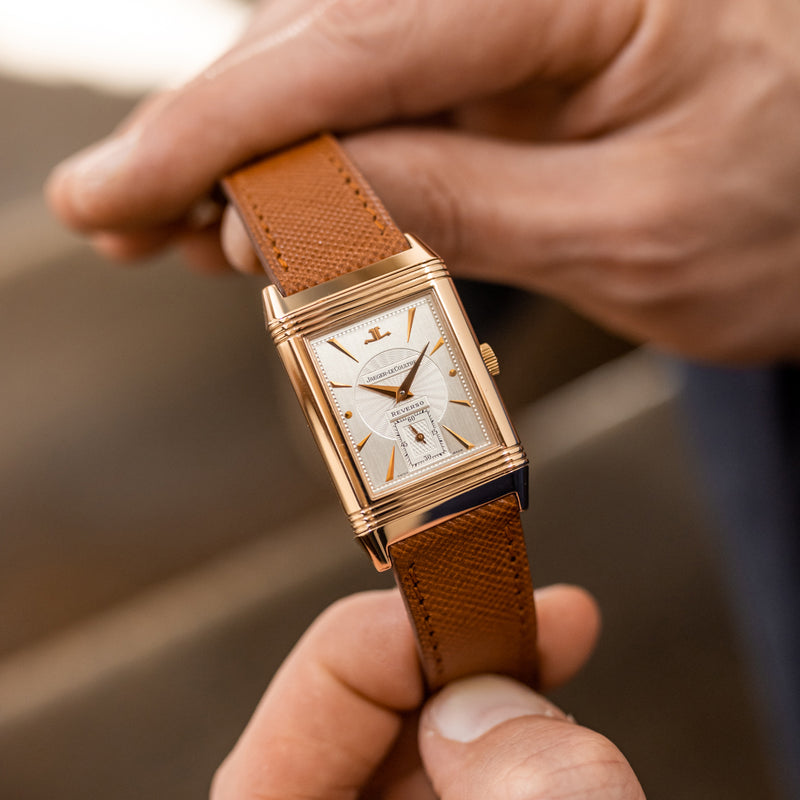
The Jaeger-LeCoultre Reverso is recognizable by its rectangular case and the cradle that allows the watch body to turn over. Created in 1931 with polo in mind, the original idea protected the dial by presenting the metal back outward. That practical solution became part of the watch’s Art Deco identity. On a replica, the reversible case is a central feature to inspect rather than a detail to take for granted.
How the case shapes the experience
The inner watch case sits within a carrier connected to the strap. Its sliding and pivoting action allows it to reverse, then settle back into place. Accurate-looking proportions matter, but so does a secure fit when the case is closed.
Request a video of the actual watch being opened, turned, and returned to its normal position. Look for controlled movement and a stable final fit. Grinding, obvious looseness, or a case that does not sit evenly in its cradle deserves clarification. Do not force a mechanism that resists.
Classic and Tribute designs
The Classic approach emphasizes a restrained dial and the familiar ridged case details. Tribute versions bring different dial treatments and a more selective use of vintage design cues. Silver, blue, and burgundy faces can give the same rectangular outline a very different presence.
Compare the exact model being represented. Hand style, hour markers, small-seconds placement, and dial texture can vary. A general Reverso label is not enough to establish whether a particular combination of case and dial details belongs together.
What a second dial means
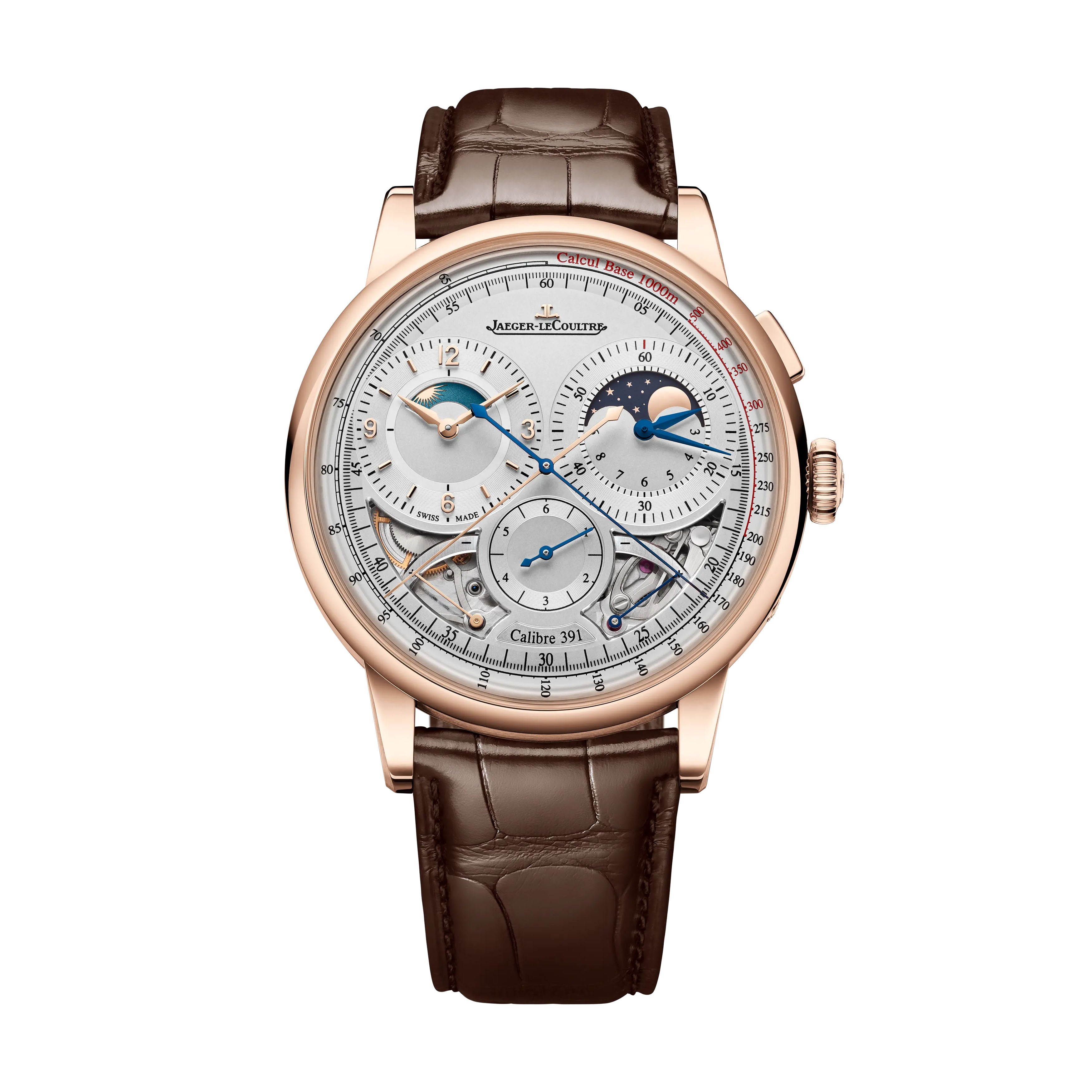
Duoface designs use both sides of the reversible case as displays. Their appeal is partly visual and partly functional, with different dial treatments and additional time information. A replica with two faces may operate differently from the original and should have its own clear instructions.
| Feature | What to confirm |
|---|---|
| Reversible case | The watch turns and returns securely to the cradle. |
| Second dial | Its hands move and show the function described. |
| Second time zone | How it is adjusted and whether it can be set independently. |
| Day/night indication | Whether it is functional and linked to the intended time display. |
A second dial is not proof of a particular movement architecture. Ask which mechanism is installed and whether both faces are driven as described. Decoration visible through a caseback cannot answer all of those questions.
Rectangular size needs two measurements
A width figure alone can make a Reverso seem smaller than it feels. The case’s length along the wrist, its thickness, and the shape of the carrier are equally important. Compare both length and width with a watch you know rather than translating a rectangular width directly into a round-watch diameter.
The strap connection also affects fit. Confirm the required strap width, available length, and buckle arrangement before planning a replacement. A thick or stiff strap can change how the case rests even when the metal dimensions are suitable.
Small finishing details stand out
Straight dial edges provide a clear reference for judging marker alignment and printing. Look at the ridged case decoration, the polished and brushed surfaces, and the gaps around the carrier. Consistency matters more than a single dramatic close-up.
The Reverso can work with formal clothing or a more casual leather strap, depending on the chosen dial and proportions. Its reversible construction does not make a replica suitable for rough sport or water use. For a conventional round case, compare the Master guide, or browse the Jaeger-LeCoultre collection at Beasts.us.com.