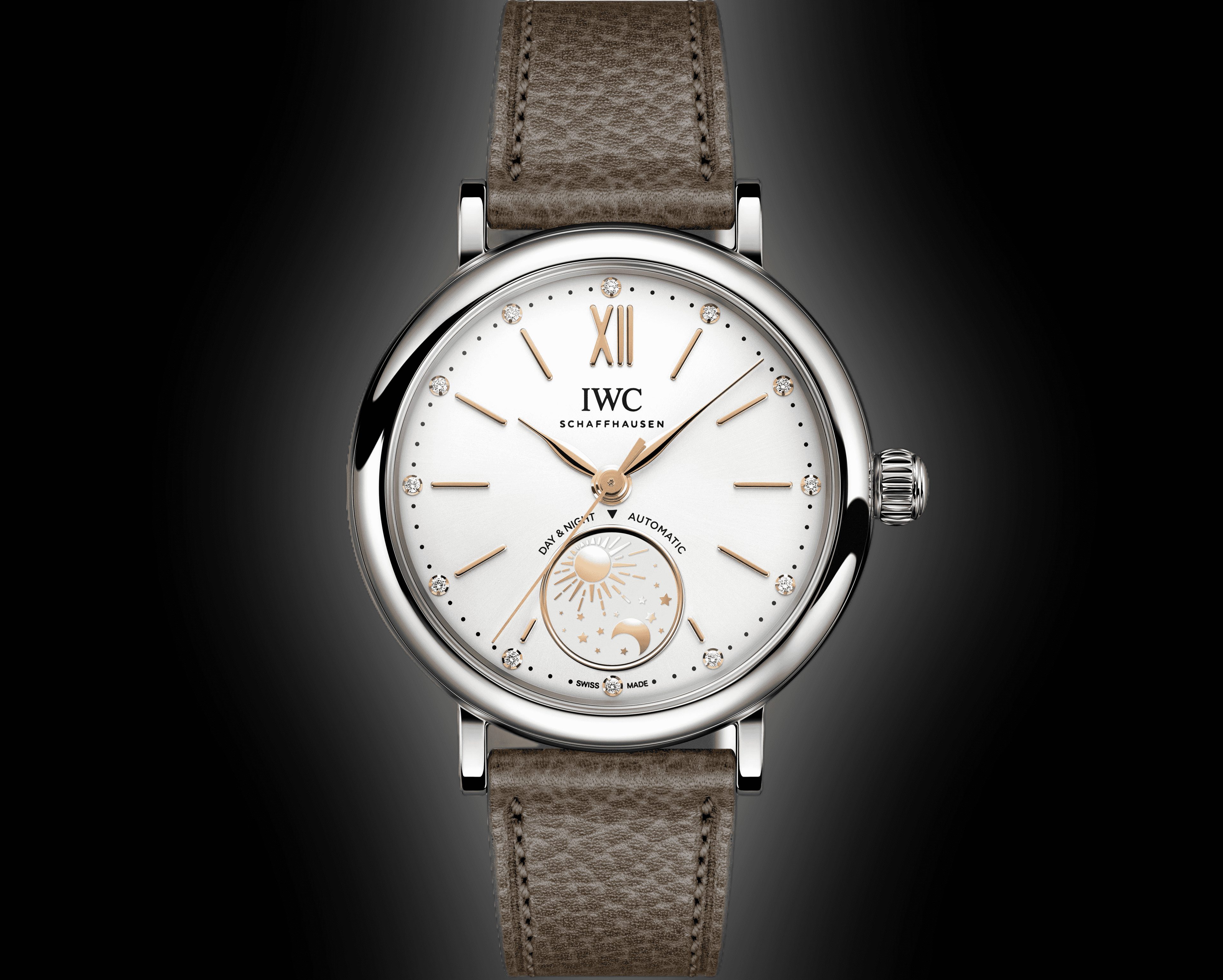
The IWC Portofino uses a round case, fine hands, and a restrained dial to create a dress-oriented watch. Its name evokes the Italian Riviera, but its appeal is easy to understand without that association: the design places a few carefully arranged details in a generous amount of open space. A Portofino replica is best judged through those proportions and the quality of its finishing.
Simple details carry the design
A narrow-looking bezel and slim markers help the dial feel open. Applied batons or Roman numerals give different versions their character, while silver, white, blue, gray, and green treatments change the mood without changing the basic idea. The result can feel understated or more colorful depending on the combination.
Because there is little visual clutter, small flaws can be conspicuous. Inspect the spacing of the logo, the alignment of the markers, and the edges of the hands. Photographs taken under angled light are useful for checking whether a sunburst finish is even or a dial surface appears marked.
Automatic, chronograph, or moon phase?
The simpler automatic design keeps attention on the time display and, where present, the date. A chronograph adds pushers and counters, giving the face more activity and usually changing the case profile. Moon-phase versions introduce a decorative focal point while preserving much of the collection’s quieter layout.
| Style | What draws the eye | What to verify |
|---|---|---|
| Automatic | Hands, markers, and dial finish | Time setting and date operation where fitted |
| Chronograph | Subdials and case-side pushers | Working counters and a clean reset |
| Moon phase | The moon display | Whether it follows a lunar cycle or serves another function |
Do not assume that a moon image establishes a working lunar complication. Ask how the display advances, how it is adjusted, and what mechanism is installed. The same principle applies to chronograph counters: their appearance and their operation should be described separately.
Find the right proportions
The Portofino family includes smaller designs around 34mm, automatic formats around 40mm, and chronograph examples around 42mm. These are useful ways to compare the collection, but the measurements of an individual replica may differ from an original reference.
Case thickness is particularly relevant to a watch intended for dressier clothing. A side photograph can reveal a raised caseback or tall crystal that is not obvious from the front. Compare the complete height with a watch that already fits beneath your cuffs, and check whether the lugs extend beyond the flatter part of your wrist.
Choose color with ordinary lighting in mind
A silver dial can look almost white in bright photographs, while a blue sunburst dial may range from pale blue to nearly black. Ask for neutral lighting if color is important to your choice. Gold-tone hands also need enough contrast against the background to remain readable.
The strap contributes strongly to the Portofino’s appearance. A smooth leather-style strap gives a different impression from a heavily textured one. Look for even stitching, finished edges, and a buckle that does not overwhelm the thin-looking case.
Make the final comparison specific
Ask for the actual movement description, measured dimensions, and stated case materials. A brand engraving does not establish original IWC construction, and a replica should not be expected to share an original watch’s performance or service arrangements without supporting information.
If you want a broader instrument-style dial, compare the Portugieser guide. For other case sizes and dial approaches, explore the IWC collection at Beasts.us.com.