The Hublot Big Bang combines a layered case, exposed bezel screws, and a substantial strap with a dial that can be as visually busy as the case itself. Introduced in 2005, the collection made material contrast central to its identity. A Big Bang replica borrows that appearance, but its movement, construction, and materials need to be assessed separately from the original Hublot reference.
What gives the Big Bang its character?
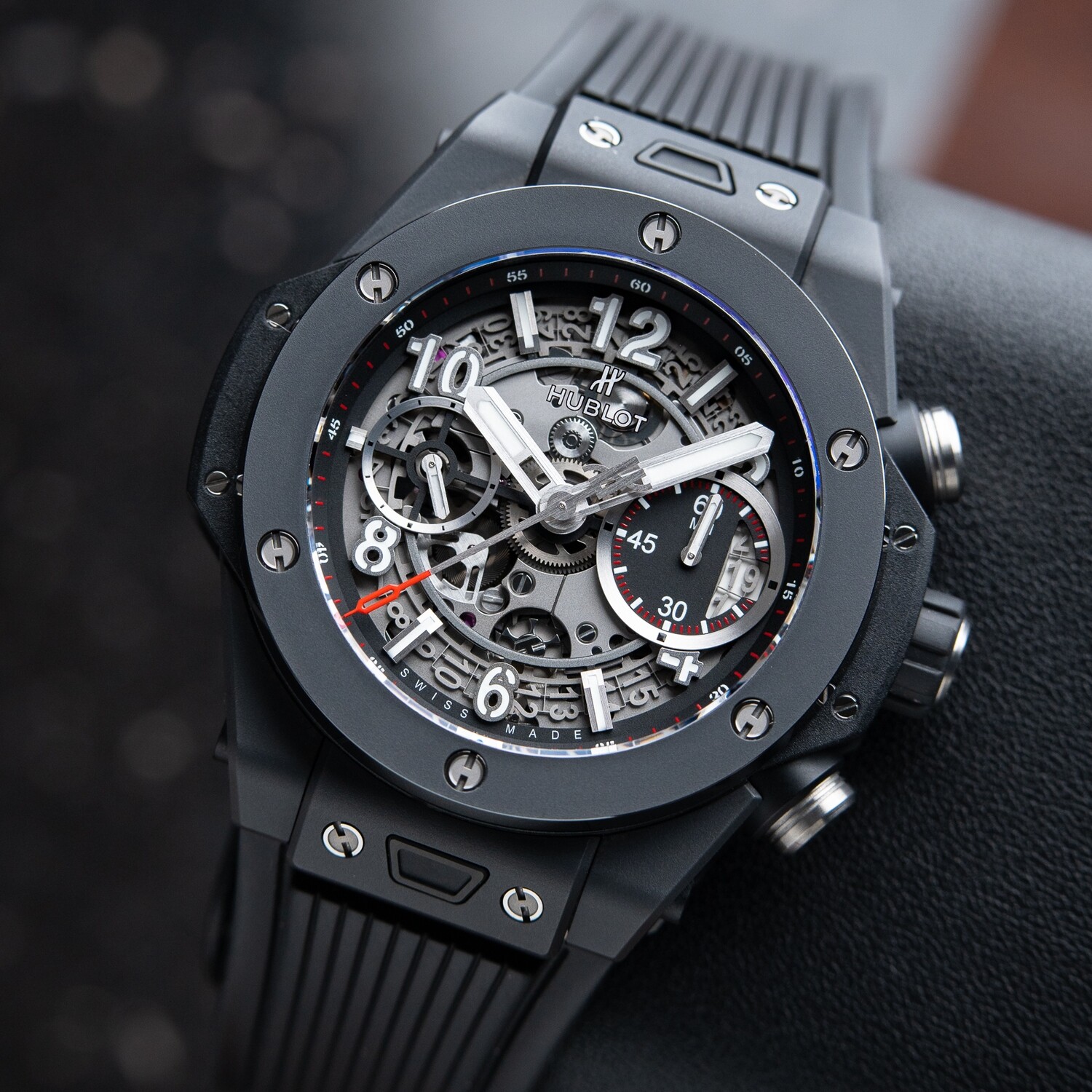
The round bezel sits above a case built from visibly separate layers. H-shaped screw heads, prominent chronograph pushers, and an integrated-looking strap make the watch recognizable from several angles. On skeleton models, the open dial adds another layer of detail, with hour markers and counters positioned over the visible mechanism.
That combination matters more than any single logo or engraving. A convincing overall design needs balanced proportions, enough contrast to read the hands, and a strap that follows the case naturally. Close-up photos should show the dial from the front and at an angle, since a flat photograph can conceal shallow or purely decorative components.
Choose the size before the finish
The supplied reference guide includes Big Bang designs in 42mm, 44mm, and 45mm formats. Those numbers are useful starting points, but diameter does not describe the whole fit. Case height, the distance across the lugs, and how firmly the strap curves downward all affect how the watch sits.
A smaller version can retain the collection’s visual complexity while feeling easier to wear. A larger one makes the bezel and dial more prominent, but may catch a shirt cuff or shift on the wrist. Request measurements of the actual item and compare them with a watch you already find comfortable.
Understand material descriptions
Titanium, ceramic, carbon, and King Gold appear throughout Big Bang reference descriptions. These names describe original Hublot materials or finishes; they do not establish what a replica contains. A gold-colored coating is different from a precious-metal case, and a transparent case is not automatically sapphire.
- Ask for the stated material of the bezel, case, caseback, and clasp separately.
- Look for consistent brushing, clean polished edges, and even transitions between finishes.
- Check visible screws for damage or poor seating without trying to remove them.
- Inspect carbon-pattern surfaces in several photos rather than relying on a single promotional image.
Separate chronograph appearance from function
UNICO is part of Hublot’s original movement terminology. An engraving or similar-looking bridge on a replica does not prove equivalent engineering. Ask which mechanism is installed and which counters actually operate. A visible wheel may be decorative, and a standard chronograph should not be treated as a flyback chronograph simply because the reference being copied has that feature.
A useful demonstration shows the watch running, the chronograph starting and stopping, and the timing hands returning to their starting positions after it has stopped. The seller should also explain the crown positions and any restrictions on adjustment. Follow instructions for the installed movement rather than procedures taken from an original Hublot manual.
Check the parts you will handle daily
The strap and clasp deserve as much attention as the dial. Look for a flexible strap, neat attachment points, and a clasp that closes securely without sharp edges against the skin. Confirm replacement-strap compatibility before purchase, since the case connection may differ between versions.
Do not infer water resistance from dive-style styling or caseback text. Any claimed rating needs evidence for the individual watch. For a cleaner Hublot design, read the Classic Fusion guide; for the broader range, explore the Hublot collection at Beasts.us.com.