Richard Mille-inspired replicas are defined by more than a recognizable tonneau outline. Their layered cases, exposed screws, openworked displays, and unusual material claims all contribute to the appearance. The RM 011, RM 035, and RM 055 represent different approaches within that design language, so comparing them starts with shape and function rather than a single factory score.
RM 011: the busiest dial of the group
The RM 011 is associated with Felipe Massa and a chronograph-centered design. Its multiple displays, prominent controls, and layered case make it visually complex. A replica can reproduce much of that arrangement while using a different movement, so establish what each display does before judging the overall similarity.
Ask for a demonstration of the chronograph starting, stopping, and resetting. If a flyback function is advertised, request a clear explanation and demonstration specific to that mechanism. A standard chronograph and a flyback chronograph are not interchangeable descriptions. Case thickness and pusher placement are also useful points to compare in side photographs.
RM 035: a more open view
The RM 035 is linked to the Rafael Nadal collection and emphasizes an open view of the movement. Without the same crowded chronograph presentation, attention shifts toward bridge shapes, visible gears, and the contrast of the hands. The arrangement should look coherent from the front and through the back.
Replica listings may describe manual winding, automatic winding, or a modified base movement. Confirm the actual version rather than inferring it from the reference name. If an unobstructed caseback view is part of the appeal, ask for photographs showing the whole movement instead of a tightly cropped detail.
RM 055: color and case finish
The RM 055 is associated with Bubba Watson and is often represented in a bright white case. That color changes the watch’s character considerably, emphasizing the dark opening of the dial and the exposed screws. Inspect the finish around corners, screw recesses, and strap attachments where inconsistency may be easier to see.
Some listings use terms such as ceramic or ATZ to describe the intended material. Establish the actual composition of the replica and which case components the claim covers. A white surface alone cannot distinguish a ceramic component from a coated one, nor can it demonstrate the properties of an original Richard Mille material.
Carbon patterns and material claims
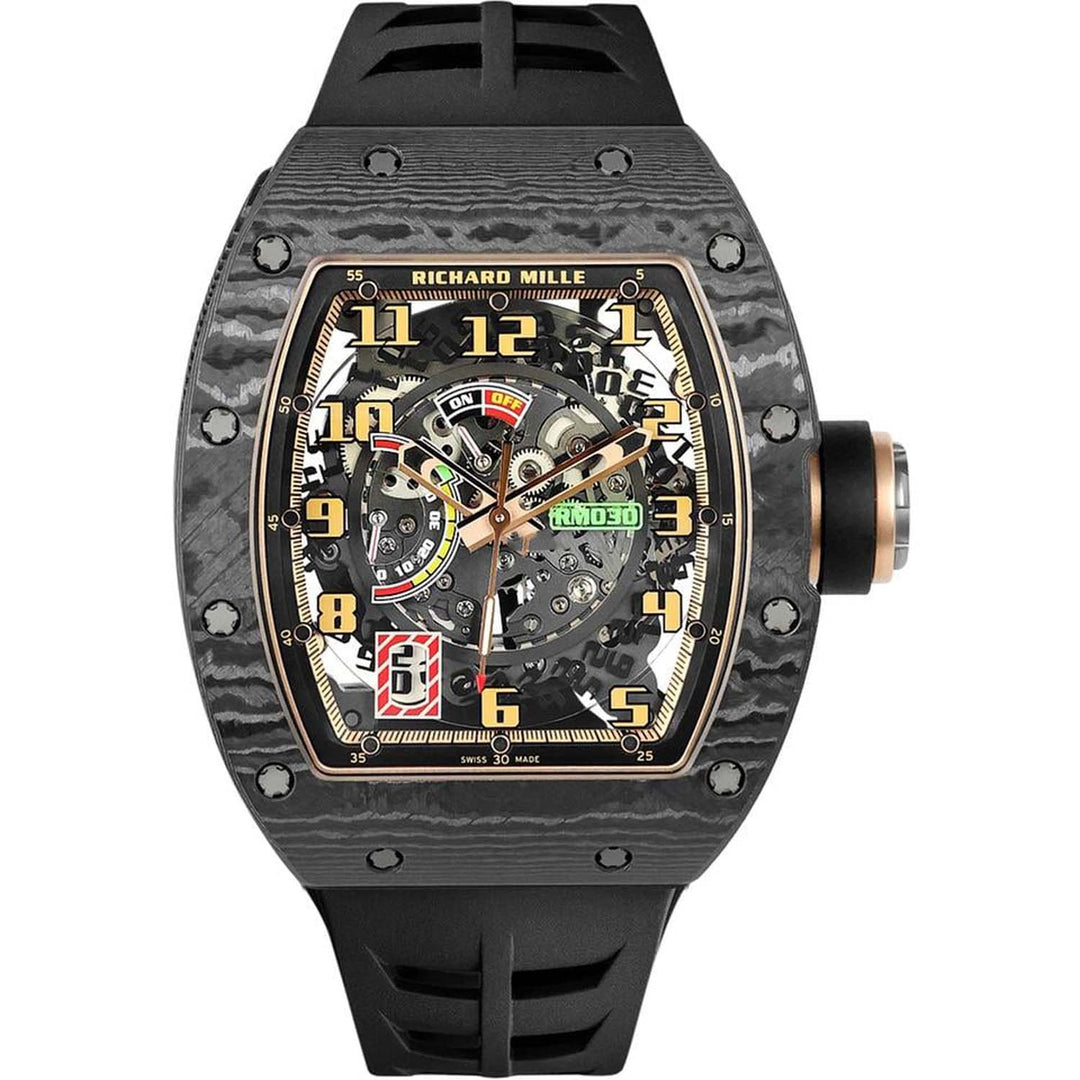
Carbon TPT and NTPT wording often appears alongside wavy black case patterns. The pattern is only one part of the comparison. Ask whether the component is a composite, a surface treatment, or a printed interpretation, and review close photographs from several angles. The case’s construction cannot be established from a single attractive texture image.
| Detail | What to inspect |
|---|---|
| Case layers | Consistent joins and a clear relationship between bezel, midcase, and back |
| Visible screws | Neat seating and clean surrounding edges |
| Openworked display | Depth, surface finish, and functional versus decorative parts |
| Strap | Fit at the case, buckle construction, and available sizing |
Evaluate the exact build
KV and other factory labels can help distinguish particular replica versions, but they do not guarantee a material or mechanism. Request the installed movement, actual dimensions, and photographs of the watch being offered. Weight can be useful context, but it should not be treated as proof of the original model’s lightweight engineering.
Tourbillon-inspired designs require especially clear descriptions of the visible mechanism. A moving decorative element is different from a working tourbillon. Choose according to the appearance and demonstrated functions you want, then compare the RM 011, RM 035, and Richard Mille collection at Beasts.us.com.