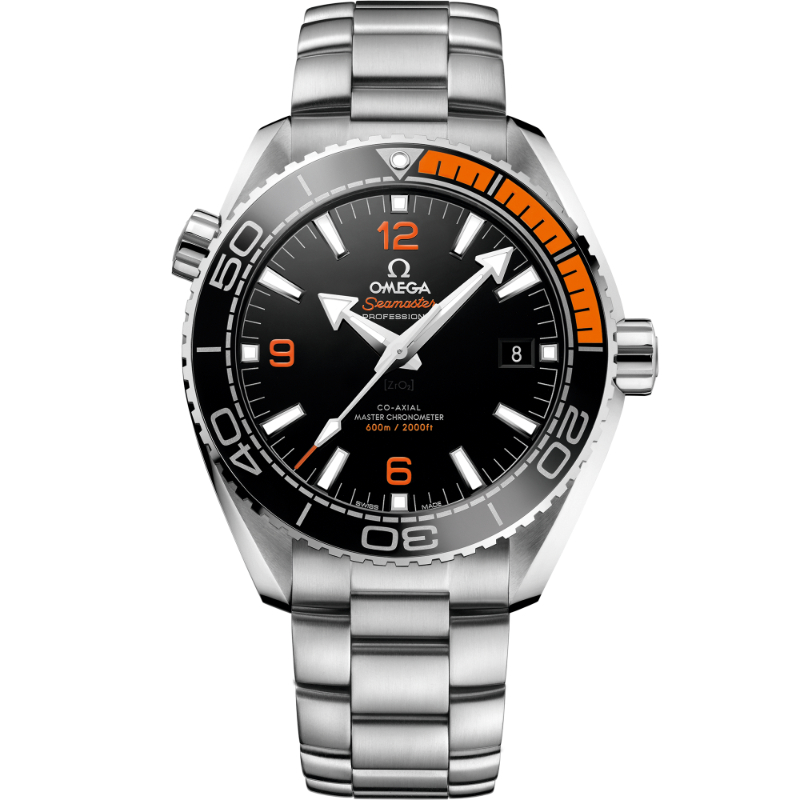
The Omega Seamaster Planet Ocean pairs a broad rotating-bezel design with a substantial case and bold hands. Introduced in 2005, it became a distinctive part of the Seamaster family, especially in combinations using orange accents. A Planet Ocean replica can reproduce that visual character, but the 600M name and original technical specifications should not be treated as evidence of the replica’s performance.
The Planet Ocean look
The design gives more visual weight to the case and bezel than the wave-dial Diver 300M. Broad hands and large markers reinforce the instrument-like layout, while contrasting bezel colors make the watch easy to recognize. The helium-valve styling is another visible part of many references.
Orange and black create the strongest contrast. An all-black combination draws more attention to the polished and brushed surfaces, while blue versions change the overall tone. Compare the exact reference and photographs of the actual watch, since color and dial details vary across the collection.
Size is more than diameter
Planet Ocean designs include smaller and larger formats, with the 39.5mm and 43.5mm sizes appearing in the source range. A larger case can provide a clear dial but also add thickness and weight. Those factors affect whether it feels comfortable during a full day of wear.
Ask for diameter, total height, lug-to-lug length, and weight with the supplied bracelet or strap. Check the first bracelet links in side views: if they extend rigidly from the case, the practical footprint can be larger than the case measurement suggests.
| Preference | Comparison to make |
|---|---|
| Strong color contrast | Orange accents against the dial under neutral lighting |
| A quieter appearance | Black or blue combinations and the balance of surface finishes |
| A smaller footprint | Actual length and thickness, not just the listed diameter |
| Travel information | GMT-hand operation and the accompanying scale |
GMT and Ultra Deep are distinct choices
GMT designs add a second time indication and a corresponding scale. Ask how the additional hand is adjusted and whether it can be set independently. The way a replica movement operates may differ from the original reference, even when the dial layout looks similar.
Ultra Deep designs push the collection’s substantial appearance further. Their original depth-rating story does not transfer to a reproduction. Consider the case dimensions and weight as a separate choice, rather than assuming that a more imposing watch is a more capable instrument.
Inspect the bezel and case finish
The bezel’s alignment, printing, and color are central to the watch’s appearance. Request a video of its operation if rotation is advertised, and inspect how its reference marker lines up with the dial. A material claim such as ceramic needs a clear product description; color and gloss alone cannot verify composition.
Look for clean transitions between polished and brushed surfaces, neatly fitted end links, and a crown that sits as intended. Do not scratch-test a bezel or open the case to investigate construction. Those actions can damage a watch without providing a dependable answer.
Separate appearance from capability
Water resistance, antimagnetic performance, and Co-Axial movement terminology belong to specific original Omega watches unless separately supported for the replica. A copied depth inscription or movement decoration is not a test result. Establish the actual movement, operating instructions, and any documented limits before use.
For a direct comparison with a different Seamaster style, read the Diver 300M and Seamaster guide. You can also compare the wider range of designs in the Omega collection at Beasts.us.com.